IDEXX · TeleMedicine · VetMedStat · 3 min read
The case was submitted. The specialist still couldn't read it.
I redesigned a veterinary telemedicine submission workflow to reduce rework, cut turnaround time, and give clinics a feedback loop they never had.
Clinical UX
Workflow Design
Interaction Design
Systems Design
Healthcare

The brief
A telemedicine platform that accepted submissions blindly. 18% came back. Specialists kept asking the same questions.
What I made
Rebuilt the submission workflow with image scoring, region transparency, and structured histories — so clinics knew what specialists actually needed before they hit send.
What made it different
The CardioPet ECG device was already in the workflow. Designing for hardware in the loop changes what "good submission UX" means.
Role
Software Interaction Designer II
Platform
Web · Browser-based clinical tool
Scope
VetMedStat Image Scoring System
Team
Hybrid product, Agile, Scrum
Timeline
2023-2024
A clinic submits. A specialist waits. Nobody talks.
VetMedStat runs the diagnostic pipeline for hundreds of veterinary clinics.
Clinics upload radiographs and patient histories. Board-certified specialists read them and report back. The platform was moving cases. It just wasn't moving good ones.
One in five cases never reached a specialist.
They came back first.
18% of submissions were flagged for resubmission. Specialists were averaging 1.9 clarification requests per case. The platform accepted whatever clinics sent and passed it on. It had nothing to say about quality.
18%
resubmitted
Cases flagged before a specialist could begin reading
1.9
per case
Specialist clarification requests per submission
14.2
hrs
Median turnaround before the redesign
28%
only
Clinics who found any image feedback useful
Clinics weren't failing. They were guessing.
They over-submitted to be safe. It still wasn't enough.
In interviews, clinics described stacking extra image series because they didn't know which ones the specialist actually needed. Then getting billed for regions they didn't mean to include. They wrote the same freeform history paragraph every case, hoping something in it would land.
What are the presenting signs, what do you specifically want me to look at?
— The same question. Every specialist. Every case.
The failure wasn't at submission, but before it. Clinics had no way to know what good looked like.
The cases were failing for three distinct reasons only apparent when sorted.
I pulled flagged resubmission and categorized them to form a pattern.
I worked through cases marked as erroneous and grouped them by failure type. Three categories kept appearing.
1.
Poor image capture. Technique issues at the point of acquisition: exposure, positioning, motion blur. The specialist could not read the image regardless of what the history said.
2.
Non-specific targeting. The images were readable. The question was never asked. Clinics submitted without telling the specialist what to look at, so the specialist sent it back to find out.
3.
Miscategorized series. Hurried submissions where anatomical regions were grouped incorrectly. An abdomen filed with a pelvis. A thorax split across two cases. The specialist could not sequence the read without clarification.
The brief had four problems. I picked the ones that mattered.
Stop penalizing clinics for not knowing what specialists need.
I aligned with clinical SMEs and product on outcomes before touching any screen.
1.
Give clinics feedback that improves their next submission, not just flags this one.
2.
Reduce resubmissions and the specialist clarification loop.
3.
Cut turnaround by eliminating back-and-forth before a specialist even starts reading.
4.
Make the platform feel like it's on the clinic's side, not grading them.
Clinics submitted. Nothing came back but a report.
I built a scoring system so the platform could finally talk back.
Four tiers: Exceptional, Good, Acceptable, Low. Each one paired with specific written feedback in a "Notes to Clinic" section of the report. Not just a label a reason, and a fix for next time. Tooltips on submission let clinics understand the standard before they send, not after they miss it.

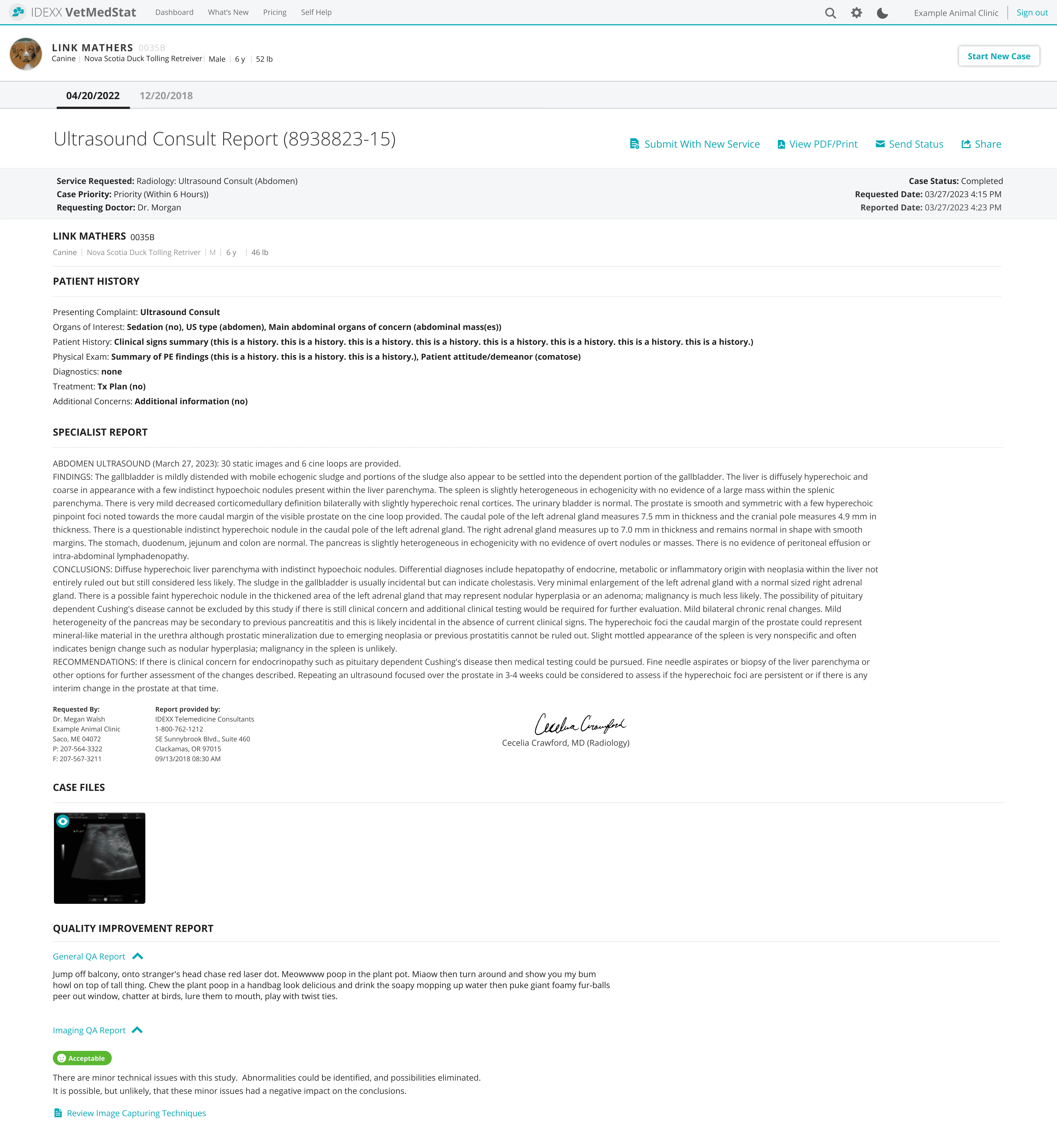
Specialists got a shared vocabulary. Clinics got a reason to open their reports.
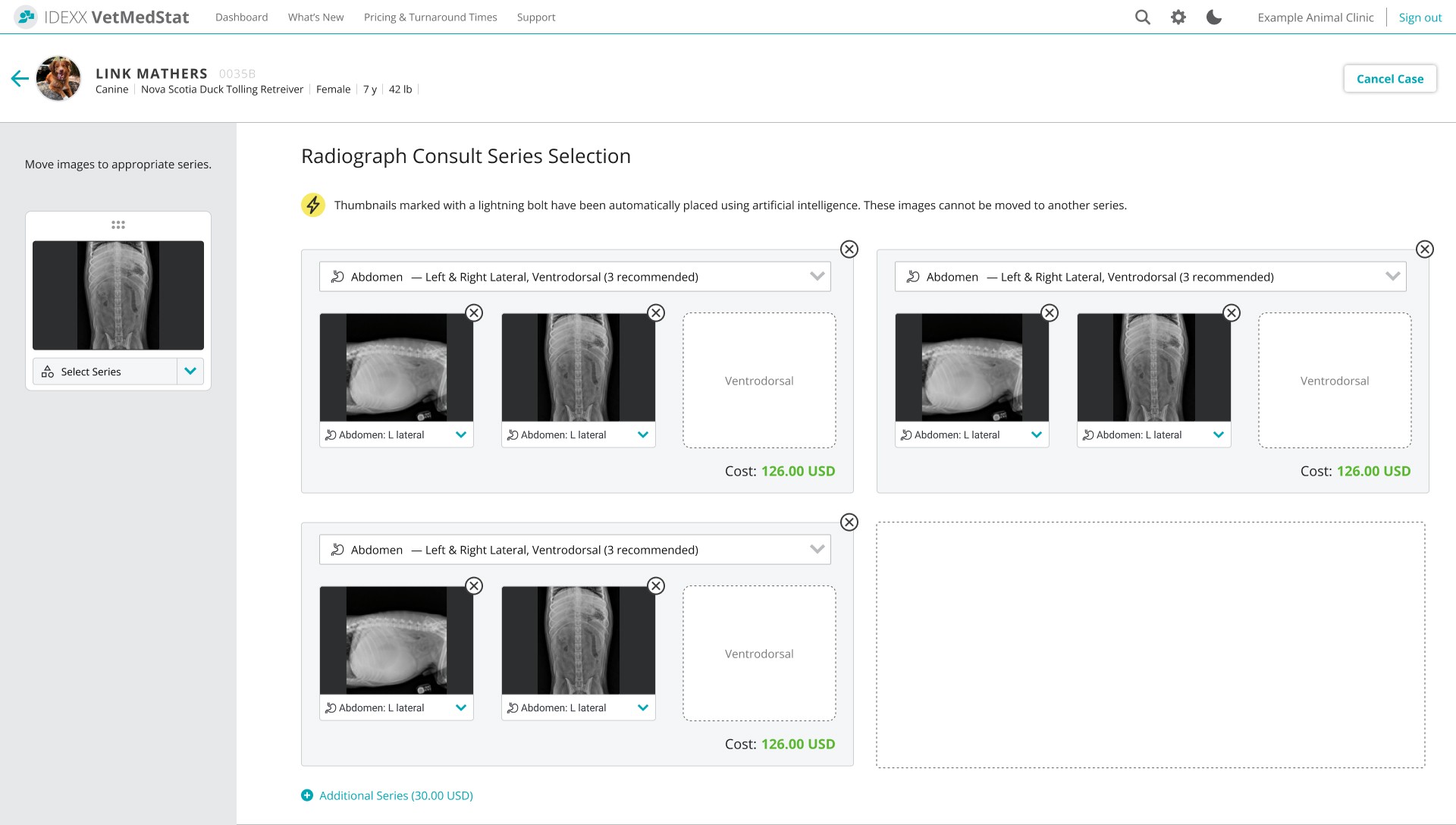
Clinics were paying for regions they didn't mean to submit.
I put the cost decision where the submission decision happens.
Images now auto-group by anatomical region at submission time. Clinics see exactly what they're sending, can drop regions that don't need a read, and get a warning if a region is under-sampled. The cost explanation lives in the submission step, not a help article, not a follow-up email.
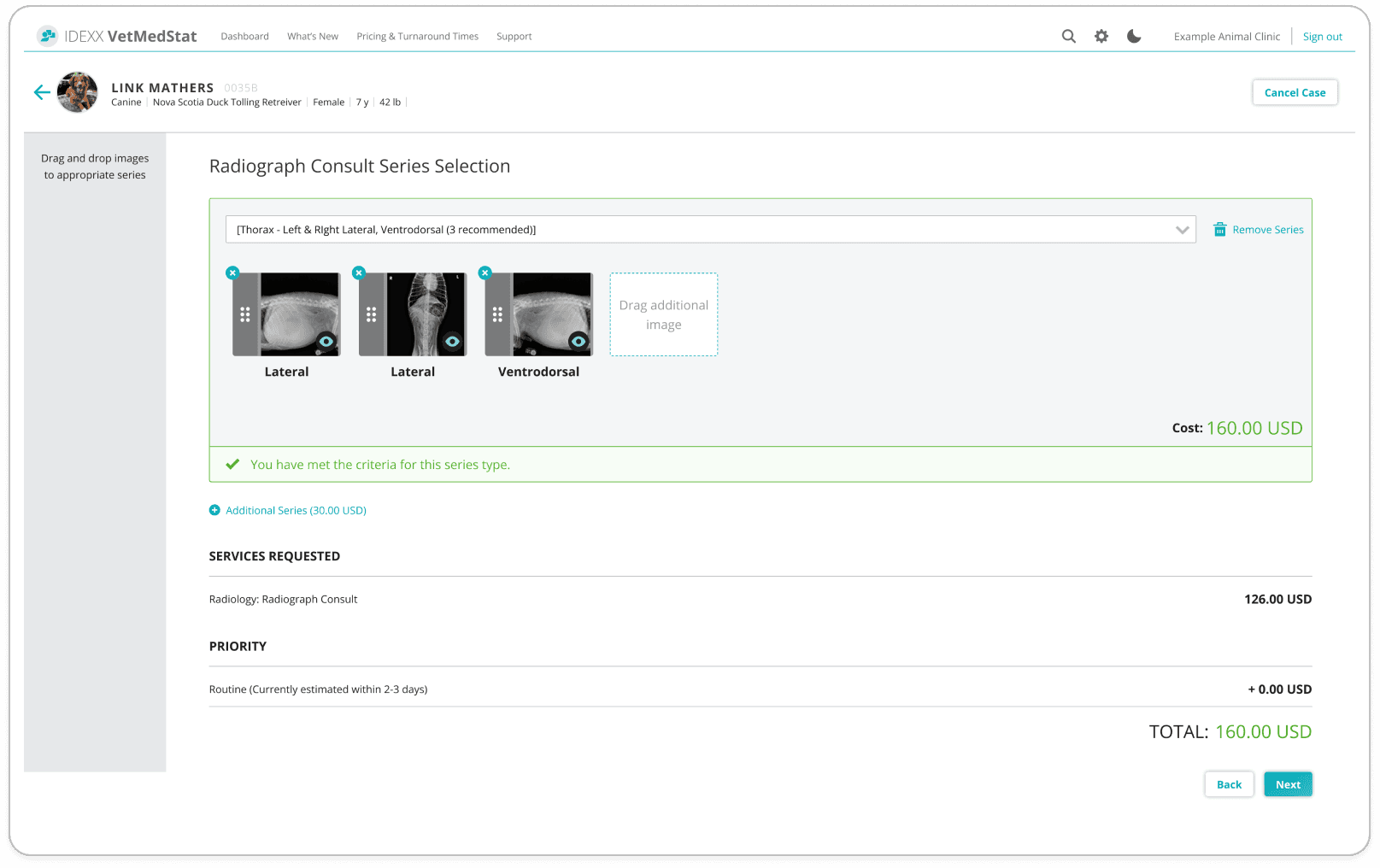
Specialists got a shared vocabulary. Clinics got a reason to open their reports.
The over-submission wasn't carelessness, but uncertainty. The fix was better visibility not policy.
Every specialist asked the same questions. Nobody fixed the form.
I replaced the blank text field with questions worth answering.
Vitals, prior diagnostics, treatments, and a field for what the clinic specifically wants the specialist to address. Required fields. Dynamic branching. A private notes section that stays out of the final report. Inline examples at every step so "sufficient history" stops being a guessing game.


The ECG trace arrived clean. The case was still unreadable.
Hardware in the workflow changes what the software has to do.
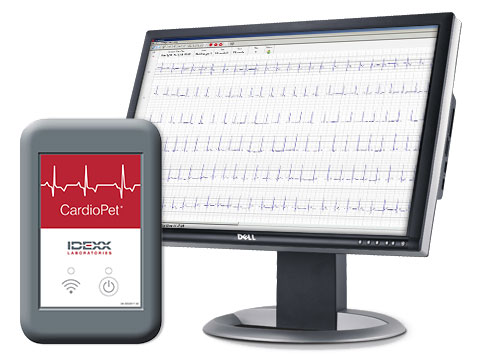
CardioPet ECG device adoption was growing across the same clinic network while this redesign was in progress. The device captures a cardiac trace in three minutes and pushes it directly into VetMedStat. Clean transmission. Wrong assumption.
CardioPet ECG · Hardware/Software Handoff
The device did its job. The submission didn't.
Cardiologists need breed, weight, presenting signs, and current medications to interpret an arrhythmia trace. It was sparse in the file. It's in the history; the same freeform field that was failing for radiology, now failing for cardiac reads with higher clinical stakes.

The assumption
What actually happened
Capture = quality
A clean 3-minute trace still varied wildly in interpretability
Submission = context
Cardiologists received traces with no clinical history attached
Device adoption = workflow integration
Clinics added the hardware faster than staff learned to contextualize its output
When a physical device is in the workflow, the software can't assume the human step happened correctly. The interface has to account for what the hardware can't check.
Six months after 24.5 shipped.
The numbers moved because the behavior changed.
Metric
Before
After
Change
Cases flagged for resubmission
18%
10%
↓ 44%
Clarification requests per case
1.9
1.1
↓ 42%
Median turnaround time
14.2 hrs
12.0 hrs
↓ 15%
Clinics rating image feedback as useful
28%
65%
+37 pts
Every incomplete case had an animal waiting at the other end.
A better submission changes what happens to the patient.
A cleaner trace, a complete history, a specialist who can read the case on the first pass. Each one changes what a clinician can say with confidence. That changes what they do next. That changes what happens to the animal on the table.
Better tooling will not eliminate diagnostic error. But it can close the gaps that make error more likely.
The most interesting problems I found here weren't on screen. They were in the gap between a physical device doing its job and a workflow that hadn't caught up yet. That's the kind of problem I want to keep solving.